

Leather Tanning

A heritage craft of cleaning and treating hides by traditional methods, turning them into leather fit for tools and everyday goods.

Leatherwork

About Leather Tanning

Tanning begins by soaking hides and scraping away hair and fat, then treating them with local plant tannins such as pomegranate rind and tree bark until they soften and resist decay. Once dry, the hides are stretched and polished, ready to be shaped.

Tanning served nomadic and settled life alike: leather was the material of water skins, buckets, saddles and bags.

How it is made

  1. Step 1: Soaking and cleaning the hides

  2. Step 2: Removing hair and fat

  3. Step 3: Steeping in tanning agents

  4. Step 4: Drying and stretching

  5. Step 5: Polishing and softening

Tools

  • Scraper
  • Soaking vats
  • Knife

Raw materials

  • Goat and camel hides
  • Pomegranate rind
  • Tree bark
  • Salt
  • Water

More traditional arts

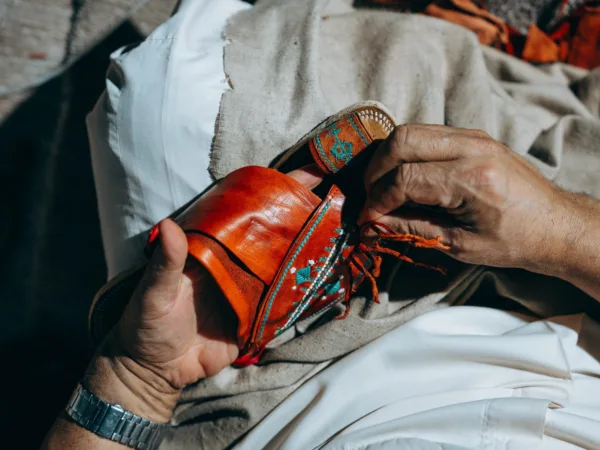
  • A craftsman stitching a traditional leather shoe

    Leatherwork

    Leather Stitching & Shoemaking

    A handicraft of shaping leather and decorating it with stitching and detail inspired by local heritage.

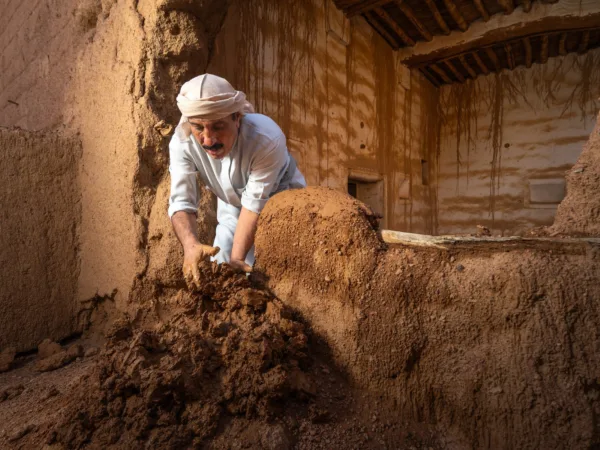
  • A builder shaping mud inside an earthen house

    Traditional Building

    Earthen Building & Gypsum Ornament

    A traditional craft of adorning homes with geometric gypsum carving and ornament drawn from Najdi heritage.

  • A black Hasawi bisht embroidered in gold zari

    Textile Crafts

    Hasawi Bisht Making

    A time-honoured craft of Al-Ahsa built on fine tailoring and hand embroidery in zari thread, producing a bisht that joins quality of making with beauty of detail and reflects the authenticity of Saudi heritage.

Feedback and suggestions

We welcome your suggestions

To share a suggestion or a comment about this page or the site as a whole, fill in the form below.

I have a suggestion

Tell us what you think and help us improve

Did you find this page useful?